Claude Tag Isn't New Technology. It's a GTM Move.
Claude Tag isn't new technology.
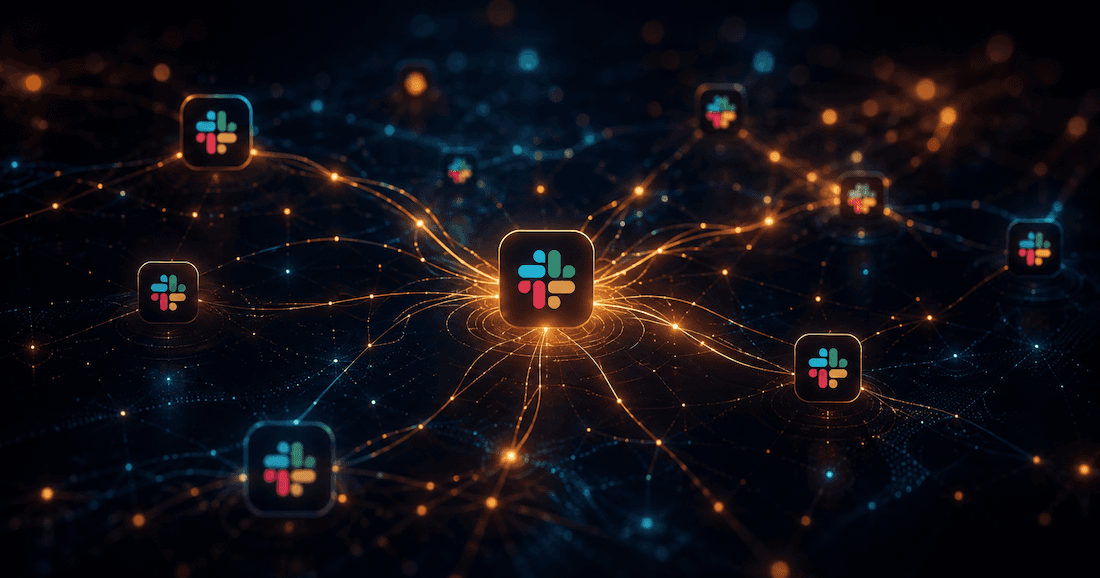
When Anthropic announced Claude Tag — a persistent, ambient AI teammate that lives inside your Slack channels — the tech press treated it like a breakthrough. And on the surface, it looks like one. An AI that remembers context, monitors conversations, proactively flags what needs attention, and executes multi-step tasks while your team focuses on other work.
But if you've been building with the Claude API, Supabase, and Slack's developer platform, you already know what this is under the hood.
Every Feature Maps to a Primitive
Here's the full breakdown:
-
Persistent memory — Postgres/Supabase + conversation history. Store message threads, summaries, and task state in a database. Retrieve relevant context on each new interaction. This is table stakes for any stateful AI app.
-
Ambient mode — Slack event webhooks + cron jobs. Subscribe to channel events via the Slack Events API. On each event, pass context to Claude and decide whether to respond. Schedule proactive check-ins with a cron job. Nothing novel here.
-
Multiplayer context — single bot token, channel-scoped DB state. One bot identity per channel, all users interacting with the same Claude instance, all state scoped to that channel in your database. Any Slack bot with a shared backend does this.
-
Cross-channel learning —
conversations.historywith scoped permissions. Slack's Conversations API lets you read message history from any channel your bot has been invited to, with the right OAuth scopes.channels:historyfor public channels,groups:historyfor private ones. -
Async task execution — a job queue (Bull, Supabase queue, whatever). User tags Claude, job gets queued, worker processes it in the background, result gets posted back to the thread. This is a standard web architecture pattern.
-
Department isolation — row-level security + scoped API keys. Supabase RLS lets you enforce data boundaries at the database level. A Claude instance scoped to your legal team's channel literally cannot read your engineering team's data. This is multi-tenant SaaS architecture applied to an AI agent.
-
Multi-step task breakdown — prompt chaining, any Triage → Plan → Execute pipeline. You give Claude a task, Claude breaks it into subtasks, each subtask runs sequentially or in parallel, results get synthesized. This is prompt engineering, not systems engineering.
Most of this could have been built a year ago. Some of it only became fully viable in early 2026 when Slack shipped the Real-Time Search API and native MCP client support. That infrastructure gave AI assistants permission-aware, real-time access to workspace conversations without duplicating or moving data. One piece out of seven was waiting on Slack, not Anthropic.
What Anthropic Actually Launched
What Anthropic actually launched was a GTM move.
The enterprise contracts were already signed. Over 1,000 companies spend $1M+ annually with Anthropic. 70% of Fortune 100 companies are already Claude customers. Eight of the ten largest Fortune 10 companies are in that customer base. Claude Tag deepens those relationships and opens new ones.
The engineering was the easy part. Getting a large enterprise to let an AI read their Slack channels is the hard part. That requires legal review, security audits, SOC 2 compliance documentation, data residency guarantees, and a procurement process that can take months. Anthropic already had all of that in place. The trust layer was built. Tag is what you ship when the distribution is already there.
And they're not offering this alongside the old Claude in Slack app. Existing users have a 30-day window to migrate before the original integration is replaced entirely on August 3, 2026. That's not a feature launch. That's a platform move.
What This Means for Startups Building in This Space
If your startup's core value proposition is "Claude in Slack with memory and ambient monitoring," that pitch just got meaningfully harder. Not impossible. Platform-agnostic approaches, multi-LLM support, deeper vertical specialization, or existing enterprise relationships could still differentiate you. But the generic version of that product now competes with a first-party Anthropic offering backed by enterprise contracts already in place.
This is the pattern that plays out every time a major AI lab ships a productized wrapper around their own API. The startups that survive are the ones with orthogonal value: proprietary data, network effects, workflows so embedded they can't be ripped out, or verticals the labs haven't targeted yet.
Build on platforms. Just know the difference between a business and a feature someone else will eventually ship.
What This Means If You're an Enterprise Evaluating Claude Tag
The build-vs-buy question here is simpler than it looks.
If you're already a Claude Enterprise customer, Tag is effectively a one-click unlock into a workflow layer you already paid for. The compliance, the trust, the admin controls are all inherited from your existing contract. Try it.
If you're not a Claude Enterprise customer, the calculus is different. A custom-built Slack AI agent scoped to your exact workflows, integrated with your specific data sources, built on whatever LLM fits your stack, might serve you better than a first-party product designed for the broadest possible enterprise audience. Custom builds also give you model flexibility. You're not locked to Anthropic if a better model ships next quarter.
The primitives are all there. Supabase for persistence and RLS-enforced isolation, Slack's Events API and Conversations API for real-time and historical context, a job queue for async execution, and the Claude API for the intelligence layer. A full-stack developer who knows these tools can spec, build, and deploy something like this in weeks, not months.
Need Something Like This Built?
If you're a team that wants a Slack-native AI agent with persistent context, ambient monitoring, async task execution, or department-scoped isolation and you want it built to your workflow rather than Anthropic's roadmap, that's exactly the kind of work I do.
I'm Ryan Reiss, a self-taught senior full-stack developer with 7+ years of React, 3+ years of Next.js and TypeScript, and hands-on experience building production AI applications with the Claude API, Supabase, and Stripe. I built attn.live as sole developer: 27-table Supabase schema, 100+ API endpoints, real-time features, Stripe billing. I've been building AI-native tooling since before it was the obvious thing to do.
Or if you want to explore what a custom build might look like for your team:
Free Resources from Code350
Start your learning journey with these completely free courses and resources. No hidden costs, just quality education.
Build & Deploy a Next.js Site in 10 Minutes
Build a business landing page in under 10 minutes from scratch with Next.js and deploy it live — no experience required.
Build Your First Component
Learn React fundamentals by building real components from scratch. Write JSX, pass props, manage state, and handle events — all inside the Code350 Workspace with AI tutoring that adapts to your pace.
All free courses include full access to video content, exercises, and AI-assisted learning.